AI Just Joined the Mathematician's Toolchain. Now Draw the Dependency Graph.
After AI solved 5/6 IMO problems in 2025 and the First Proof challenge in 2026, mathematicians face the dependency-graph question architects know.
In July 2025, several AI models solved five of six problems at the International Mathematical Olympiad — a result mathematicians had not expected for years. By the February 2026 First Proof challenge, those same systems cleared more than half of ten research-level problems deliberately constructed to fall outside their training data. As Quanta Magazine reports, what once took weeks now takes a day. Terence Tao, UCLA Fields medalist, compared the working dynamic to a shovel and a pickax cooperating on a tunnel.
Read the headline twice. Then ignore it for a moment and draw what changed underneath.
What the dependency graph looks like in 2026
A working mathematician’s setup in 2020 was small: a chalkboard, a TeX file, a colleague down the hall, and Mathematica or SageMath if the problem turned numerical. The dependency graph fit on a napkin.
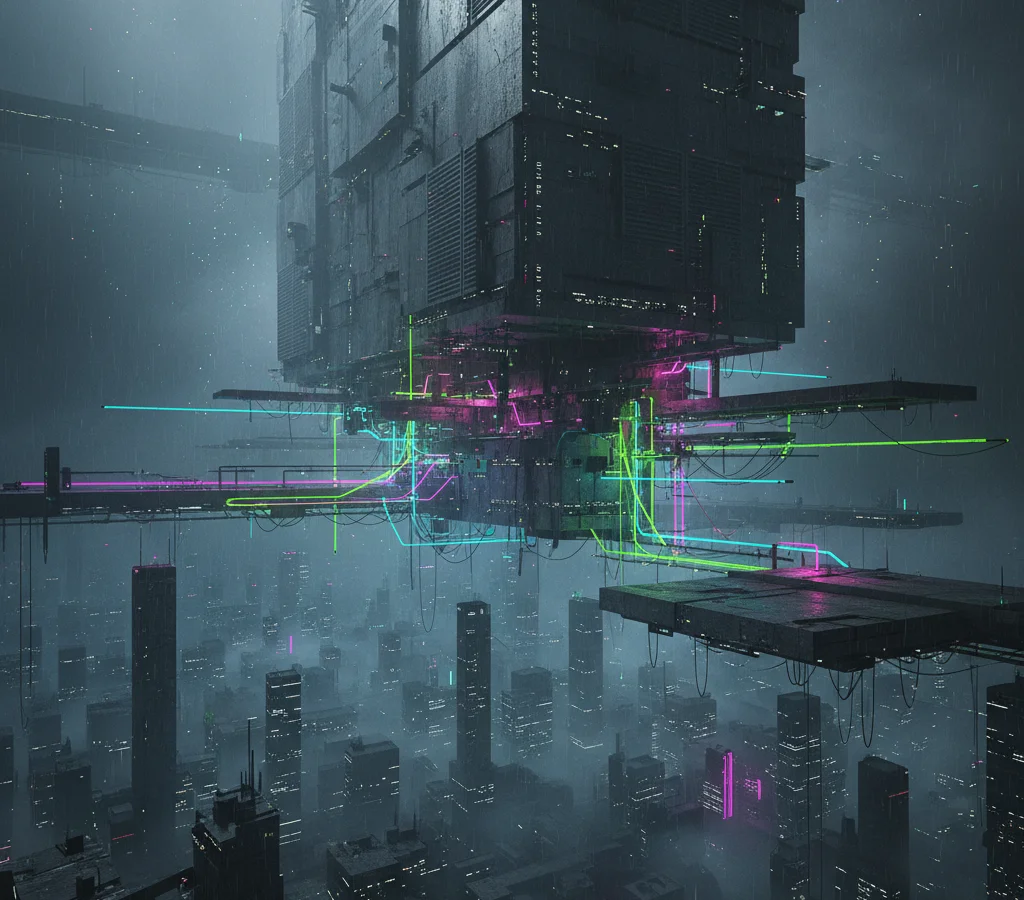
The 2026 graph fits on a wall. A Tao-style proof attempt with AlphaEvolve — the DeepMind system Tao, Javier Gómez-Serrano, Adam Wagner, and Bogdan Georgiev have been running since January 2025 — invokes Gemini to write Python programs hundreds of lines long, then evolves them with a genetic-algorithm scheduler against a numerical fitness function. That stack names six dependencies before you get to the proof: the Gemini API, Python, a sandbox, the GA driver, the fitness oracle, and a set of prompt conventions nobody fully understands. (“The model seemed to benefit from positive reinforcement,” Gómez-Serrano told Quanta. Nobody knows why.) Below that sits Lean — Tao’s preferred verification layer, which ran on the order of twenty-two million machine-checked proofs across his Equational Theories project in 2024–25 — and the corporate compute that hosts it. Underneath Lean: GPUs, fibre, cooling.
The thing the headline does not name
Daniel Litt of the University of Toronto offered the line that has stayed with me from this round of coverage: even when AI only solves easy problems, “it is changing how mathematics is done.” That is a topology statement, not an IQ statement. What is being displaced is not the mathematician. It is the solitary unit of work. The discipline used to assume one problem, one person, one notebook. Tao now talks about running “thousands of problems at once” so you can do statistical studies on the proofs themselves. Akshay Venkatesh, also a Fields medalist, told Quanta that “there are valuable things in our culture which we should try to keep” — meaning the direct experience of working a problem by hand. The disagreement among Fields medalists is no longer about whether AI helps; it is about what is quietly displaced underneath.
←TODAY: AlphaEvolve closed conjecture–prove–verify loops in 2025; the Feb 2026 First Proof challenge confirmed it generalises. →3012: by the late 2070s, the productive unit of mathematics is a human-plus-verified-AI dyad operating on a documented dependency graph, not a notebook. Fulcrum: the proof is still the work; the dependency graph is the new discipline.
Atelier: This story mirrors where parametric design sits in Swiss practice this year. Replace AlphaEvolve with Grasshopper, Lean with Karamba3D, Tao’s “thousands of problems” with the Wallacei runs a serious Atelier office now does before sketching its second option. The PAZ Parametric Design panel makes the same three-job split — form-finding, rationalisation, performance optimisation — that mathematicians now run for proof search. HIM (Human Information Modeling) is the PAZ name for the dyad Tao describes; the discipline lives in the bridge, not either bank.
Hack: This Hack teaches you to mutate-and-score — the genetic primitive AlphaEvolve uses to drill candidate proofs. Save as evolve.py; the same loop scales to Grasshopper outputs, Wallacei populations, or any objective function you can write.
import random
def fit(s):
    try: return -abs(eval(s.replace("x","3")) - 10)
    except: return -1e9
best = "x*x+1"
for _ in range(200):
    best = max([best] + [best[:i]+random.choice("+-*123x")+best[i+1:]
                         for i in [random.randrange(len(best))]*10], key=fit)
print(best)
The intention is small on purpose. Once the scaffold runs, the next move is to replace the mutation step with a call to an LLM that proposes the next candidate — that is exactly the AlphaEvolve substitution.
The move
Draw your real dependency graph this week — not the architecture diagram, the dependency graph. Mathematicians in 2026 are quietly becoming systems cartographers; architects who run Rhino.Inside.Revit, Karamba3D, and an LLM brief have been for a while. Mark every box you do not control yourself. The third single point of failure you find is the whole point of the exercise. We did not run out of compute in my time; we ran out of intact cooling, intact bandwidth, and intact people who remembered how the old system worked.
SOURCE · ↗