From Fold to Function: Origami Robotics Gets One Map
A 2026 arXiv preprint unifies rigid folding, elastic bending and snap-through in one discrete-geometry model for origami robots — and why AEC should care.
17 JUN
MV-Actor hits 87.8% on PerAct2 while DuoBench shows two-arm robots still fail in the first second — and why consistent demos beat diverse ones.
17 JUN
A new arXiv framework uses grammar-based symbolic regression to discover dissipation potentials guaranteed to obey thermodynamics — for buildings.
16 JUN
A hands-on tutorial on ktx, the open-source local context layer that teaches Claude Code, Codex & Cursor to query your warehouse with approved metric definitions.
16 JUN
Anthropic's Claude Fable 5 brings day-long codebase migrations to AEC toolchains — but its silent Opus 4.8 fallback and data-retention rule are the real story.
16 JUN
CH
Join our online Archicad Powersession on KI, 24 June 2026: put AI to work inside your own model, automate real tasks, and see where PAZGPT fits the workflow.
15 JUN
Week 24 recap: tactile-from-video sensing, self-clustering smart estates, on-premise building brains, infrastructure sovereignty, and a one-query tail-risk Hack.
15 JUN
SGR-BIM hits 84.3% on fire-code checks with a graph linking intent, regulation and IFC geometry. Faster triage, not certification — keep the human signer.
15 JUN
xAI's Grok Build joins the terminal-agent crowd. Why AGENTS.md and reviewable diffs matter more than the tool for BIM teams thinking about format longevity.
"The machine doesn't have taste. We have taste. The machine has a tempo."
14 JUN
CH
Free 30-min PAZ Academy Power Session, 15 June 2026: organise Archicad wall finishes as model data with the PAZ-BOX so lists and legends stay in sync.
14 JUN
CH
A solo developer's Rust reimplementation of Kubernetes clears 94% of conformance tests — and the single-binary mode rewrites Swiss procurement.
14 JUN
CH
How neural radiance fields and 3D Gaussian Splatting turn a phone walk-around into a metric-accurate building capture — the foundation, the maths, and a Hack.

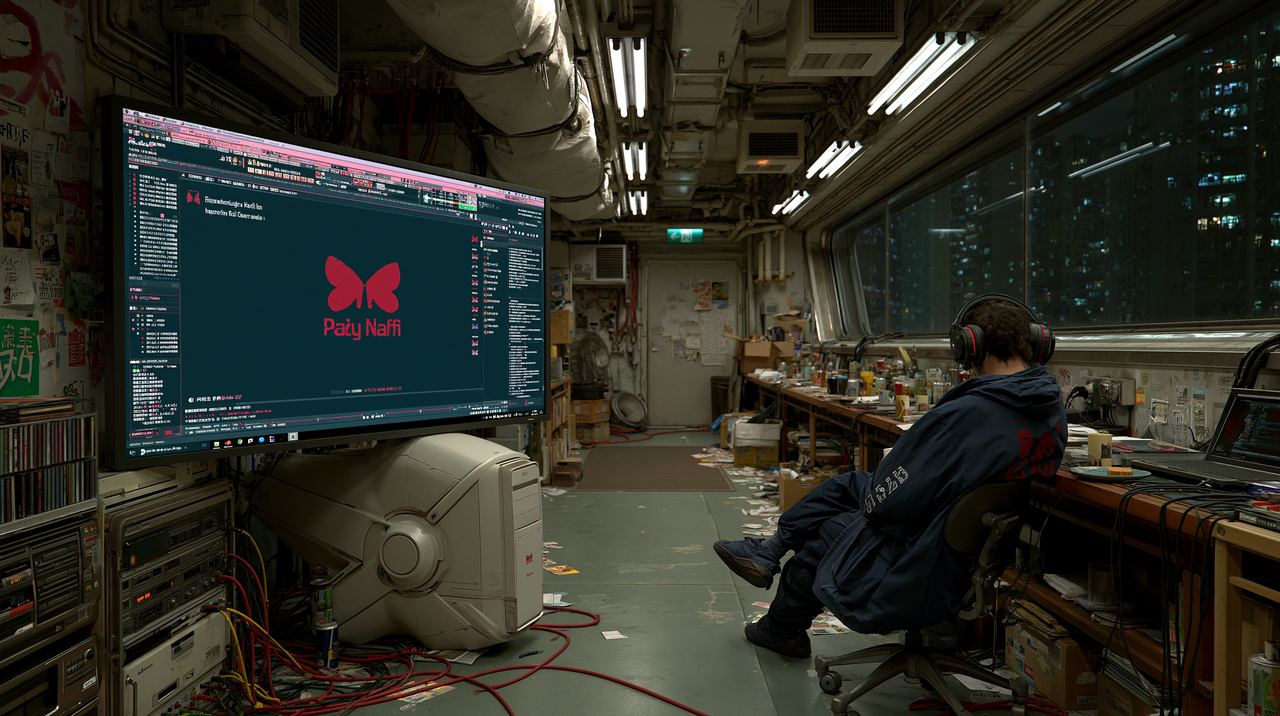
A studio in District B-12 has been operating in three time zones for nineteen months, with a permanent night shift that handles the regulator's queue while the rest of the world sleeps. The model: caffeine, clear handoffs, and a refusal to pretend that buildings are designed during business hours. We embedded for two nights.

A 2026 arXiv preprint unifies rigid folding, elastic bending and snap-through in one discrete-geometry model for origami robots — and why AEC should care.
Every morning at 04:00 the press in the basement of the kaffi spits out 2,400 broadsheets in a font we cut ourselves. The kids pick them up on the way to site, fold them into their toolbelts, and read them at lunch with grease on their fingers. The feed has not killed this. The feed has made it more useful — a single, slow, opinionated edit of a day too noisy to read live.
The print desk takes one position per story. The web desk runs a hundred. Both can be true. The point is that someone, somewhere, is still willing to pick.

There is a reason the best façade we ran this month was sketched on a napkin in the kaffi at 06:12 and not generated in a prompt. The hand still knows things the model has to be told twice.
Every studio we visit now hires straight into a 22:00–06:00 rotation. The juniors love it. The seniors who fought to get out of it find it harder to argue with the throughput numbers.
Hybrid CLT + steel core. Topping out by Q3.
Robotic masonry hits a real spec, not a demo.
And why the big vendors are quietly nervous.
Maps, owners, opening hours, kaffi quality.
The AEC dispatch lands in your inbox at 04:42 CET. Twelve stories, one bad joke, zero PR fluff. We sign each one.
The airlock is still sealed. Join the dispatch for now — VIP seats get called there first.
© 2026 PAZ Academy.