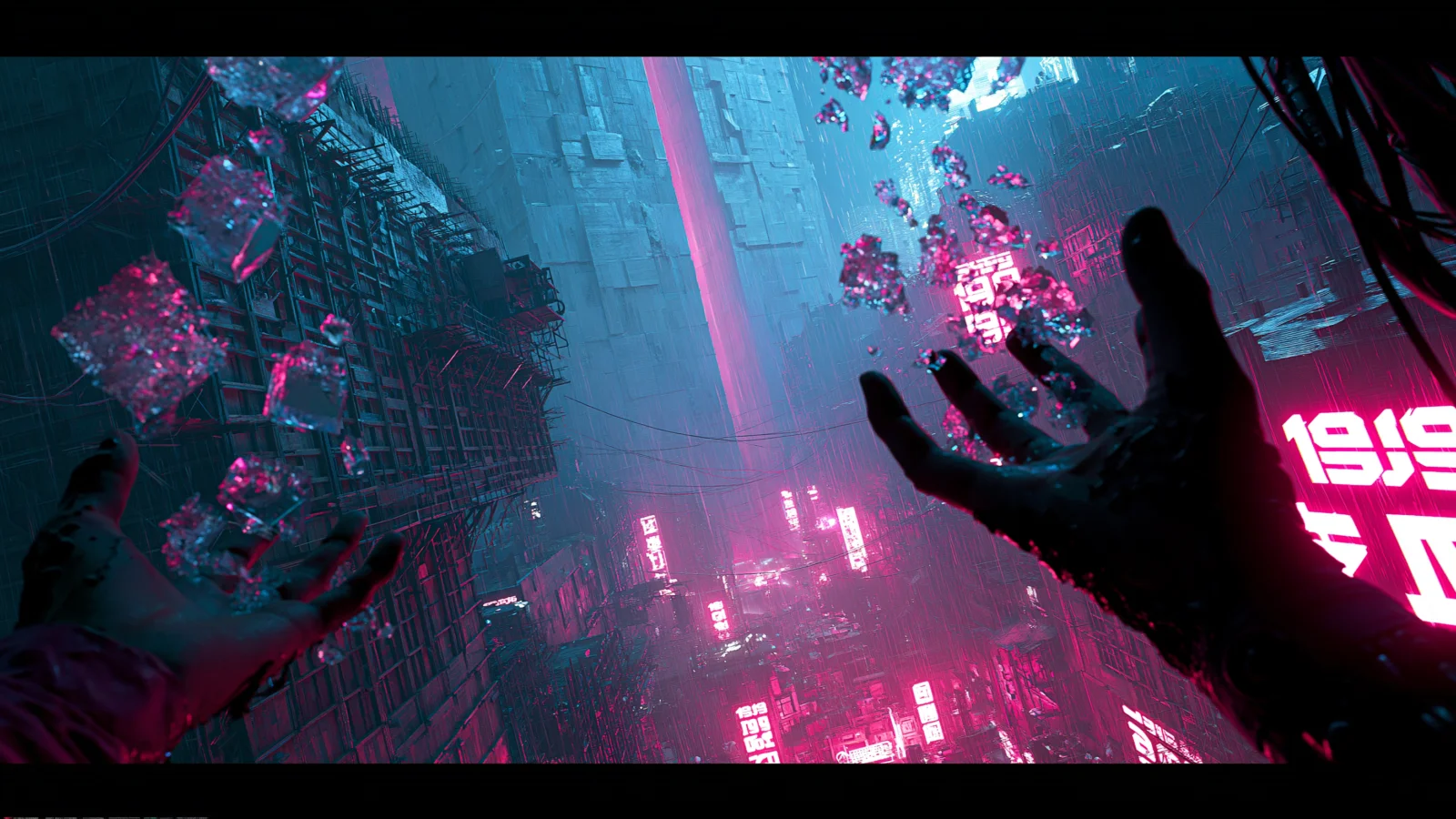
Chrono Trigger's 1999 apocalypse and the future we keep misremembering
Japanese retrofuturism, Chrono Trigger's 1999 apocalypse, and a working method for auditing your own predictions about the future — from PAZ Academy.
Begin with a confession the author of Party Like It’s 1999: Japanese Retrofuturism and Chrono Trigger, published in The Appendix, makes in his opening line: my memory is imperfect. He forgets names and birthdays because the storage was spent on pop-culture trivia. It is the right place to start a piece about Chrono Trigger — the Square role-playing game released for the Super Famicom in March 1995 — because the game is itself an argument about memory. Its heroes travel through time to stop a cataclysm dated, with absurd precision, to the year 1999 AD, when the beast Lavos erupts from the planet’s core and dooms the world to nuclear winter by 2300.
What does it mean that we now play this apocalypse as nostalgia? In 2026, Square Enix’s HD-2D remake arrived and, as ScreenRant reported, left gamers split — half wanting the 1995 sprites preserved, half wanting them gone. The disagreement is not about graphics. It is about which version of the remembered future we are allowed to keep.
The future as a thing already filed
Retrofuturism is the study of futures that have aged. The Appendix piece walks through a striking lineage: a 1969 boys’ magazine, Shōnen Sandē, ran a feature called “Computopia” predicting the world of 1989 — boxy robot proctors bonking schoolchildren who keyed the wrong answer, a surgeon guiding a computer arm through a heart transplant, Dad on a videophone. Some of it was silly. Some of it was uncannily exact. The surgical arm and the videophone arrived almost on schedule; the robot proctor became, more quietly, the autocomplete that now finishes the sentence before the child decides what to say.
This is the question the genre forces. When a 1969 illustrator imagined a teacherless classroom, he imagined a machine that corrects. He did not imagine that the more consequential machine would be the one that anticipates — that the loss would not be the teacher but the pause before the answer, the productive interval in which a person still has to think. Chrono Trigger’s 1999 was a single dramatic detonation. The version we actually got is undramatic: a slow transfer of small decisions, each one reasonable, to systems faster than consent.
←TODAY: In 2026 a 31-year-old game ships a remake, and the argument is over whose memory of the future is authoritative. →3012: By the Zurich-3012 horizon, every interface anticipates; the rare luxury is a tool that waits for you. Fulcrum: A future only counts as remembered if you can still describe the present it failed to predict.
Atelier: The lesson lands on an architect’s desk as a question about renders. A competition visualisation is a retrofuture in advance — a domed, desertified, gravity-defying promise that a real Bauleitung will either keep or quietly file away. Before you sign off the next hero image, ask which detail in it you would still defend in 1999 AD, and which is just the jumpsuit-and-hovercar reflex of our particular decade.
Hack: This Hack teaches you to measure how far a past prediction sits from present fact — the AI / ML move of turning prose into a vector and reading the distance. Embed a 1969 forecast and a 2026 description, then take the cosine similarity: the number is a crude but honest “prescience score.”
from sentence_transformers import SentenceTransformer, util
m = SentenceTransformer("BAAI/bge-small-en-v1.5")
past = m.encode("1969: a guided computer arm performs heart surgery")
now  = m.encode("2026: da Vinci robotic surgical systems in daily use")
print(float(util.cos_sim(past, now)))  # ~0.6 — Computopia was closer than it looked
Run it on your own old project briefs. The vectors will tell you, without flattery, which of yesterday’s certainties the present actually kept.
The honest move is not to mourn the analog 1990s or to crown the remake. It is to notice that retrofuturism is a memory exercise we are running on ourselves in real time — and to protect, deliberately, the experience of not-yet-knowing. Save one decision a day for the unaided version of yourself, the one who still has to think the paragraph through before the mesh offers to finish it.
Source: HN Cyber
SOURCE · ↗