
Limerick's Student Center Shows Why Procurement Architecture Still Drives Building Performance
Carr Cotter & Naessens' 2025 University of Limerick Student Center reveals how a 2015 student referendum created the procurement conditions for a building that works.
A Decade-Long System, Finally Built
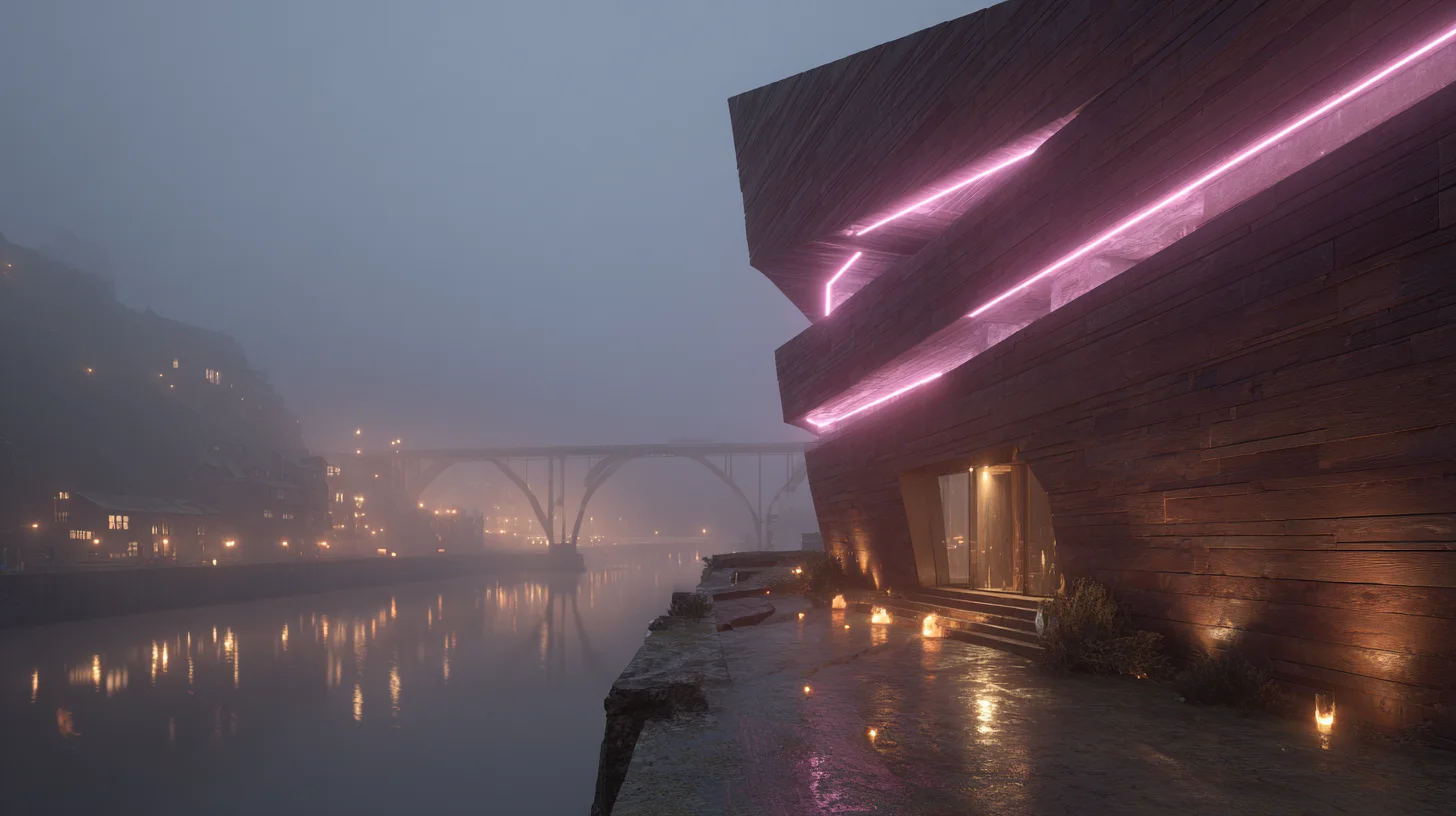
In 2025, Carr Cotter & Naessens completed the University of Limerick Student Center — 3,500 m² of campus-gateway building, photographed by Ste Muray and published this week on ArchDaily. The building is handsome. But the more interesting story is the procurement logic that produced it: a student referendum held in 2015, a levy agreed by vote, a decade of phased funding accumulation, then construction. That is not a timeline failure. That is a system working as designed.
Most AEC commentary leads with form. Lin Rauch’s desk leads with the input-output chain. So let’s map it.
←TODAY: A 3,500 m² Irish campus building completes in 2025, funded by a 2015 student levy referendum — ten years from mandate to key handover.
→3012: In Zurich-3012, participatory funding mandates are encoded directly into smart-contract project shells; the building cannot begin until token-weighted consent clears threshold.
Fulcrum: Democratic legitimacy and construction timeline are not opposites — they are sequenced inputs; the system that treats them as simultaneous fails both.
The System Behind the Site
The procurement chain here has four identifiable nodes: (1) stakeholder mandate — the 2015 referendum; (2) funding mechanism — a per-student levy, not a public capital grant; (3) brief stability — a program anchored to social space, alumni connection, and student ownership, not a shifting ministerial priority; (4) design resolution — Carr Cotter & Naessens, working with a brief that had genuine democratic backing. Each node feeds the next. The bottleneck — the decade gap — was the levy accumulation, not design indecision or planning friction. That distinction matters enormously when you are diagnosing why a project ran long.
Compare this to the failure mode common in European public education procurement: brief written by facilities management, approved by a committee the students never elected, redesigned twice when ministry priorities shifted, value-engineered on the third pass. The building that emerges from that chain is nobody’s home. The University of Limerick building, per the architects’ own description, was explicitly conceived as a “home from home” — which is only credible language when the future occupants actually commissioned it.
What This Means at Your Desk
If you are a Swiss or DACH architect working on university or civic campus projects right now, the relevant pressure point is brief integrity under procurement law. Swiss federal building procurement under the IVöB (Interkantonale Vereinbarung über das öffentliche Beschaffungswesen), revised 2021, allows dialogue procedures — Dialog — that make this kind of deep stakeholder embedding more achievable than it was a decade ago. The Limerick model, where the end-user community literally owns the financial instrument that funds the building, is an extreme case. But the principle — lock the brief to a legitimate mandate before design begins — is transferable and underused.
The risk is real: a ten-year funding runway is only viable if the brief doesn’t drift. Levy-funded models collapse if institutional leadership turns over and decides the money should go elsewhere. The University of Limerick apparently held the line. Not every client will.
Atelier: PAZ Cohort work on campus typology — particularly the HIM (Human-Infrastructure Matrix) exercises run in the parametric urbanism track — consistently shows that social-space briefs fail not in design but in brief authorship. The Limerick case is worth importing as a procurement case study: ten minutes mapping its four-node chain in a team session will sharpen your next pre-design workshop faster than any program template.
The Move
Pull the ArchDaily project page for the University of Limerick Student Center and read the architects’ description against the construction year — 2025 — and the referendum year — 2015. Then ask your team one question: on our current campus or civic brief, who actually commissioned this, and do they have the institutional authority to hold the mandate for the full design-to-delivery cycle? If the answer is unclear, that is your first design problem, and no amount of parametric massing will solve it.
Source: ArchDaily
SOURCE · ↗
PAZ Kaffi · multidisciplinary editorial, led by PAZ Academy
