
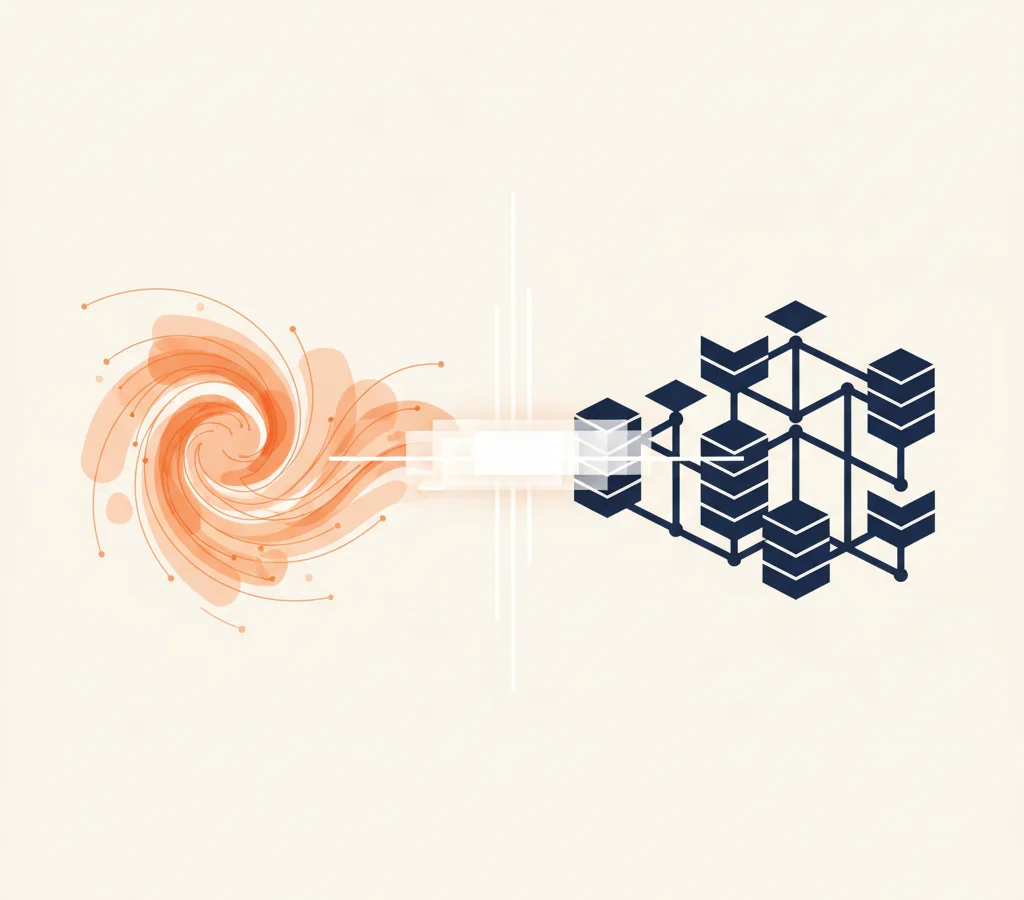
Rhino Meets Archicad: Drawing the Boundary After 40 Years of GDL
Severi Virolainen shows in the McNeel webinar when Grasshopper and when Archicad is the right tool — backed by 40 years of GDL experience.
Two tools, one honest question: What belongs where?
On April 1, 2026, 16:00 CEST, Severi Virolainen posed a question in the Rhino User Webinar that is rarely asked openly in AEC practice: Which tool is really better for which problem? Not as a marketing pitch, but as an operational decision matrix for everyday work. The recording has been freely available via the McNeel Blog since April 2 — and deserves more attention than a typical webinar announcement post suggests.
Virolainen is CEO of Algoritmi Oy (the company name is simply the Finnish word for “algorithm”), holds a doctorate from Aalto University in Helsinki, and has been writing GDL — Archicad’s native scripting language — since 1987. This is not rhetorical résumé padding. It means: he experienced Archicad in an era when Grasshopper didn’t exist, and therefore knows exactly where the platform breathes and where it strains.
←TODAY: Grasshopper–Archicad Live Connection exists but is either not deployed in many practices or treated as a black box.
→3012: The decision of whether geometry emerges in the parametric or in the BIM-native space is no longer a tool question — it is a data strategy.
Fulcrum: 2026 is the moment when this decision can still be made consciously, before automation silently takes it over.
The system behind it
The bridge between Rhino/Grasshopper and Archicad is Graphisoft’s official Grasshopper–Archicad Live Connection add-on — a plugin that enables real-time data exchange between Grasshopper definitions and Archicad elements. Graphisoft (Budapest) has expanded this channel in recent years without publicizing it loudly. The result: many practices know the connection exists, but not how to use it productively — or when it won’t be right.
Virolainen has actively integrated Grasshopper into his practice since 2016 — meaning he experienced the tool’s mature phase, not the hype. According to the McNeel Blog, both sources (announcement from March 24 and recording post from April 2) prioritized the same core message: the webinar delivers not just workflows, but an understanding of the limits of each platform. That is rare content.
What this means on the desk
The concrete practice question is: when does geometry stay in Grasshopper, and when must it become Archicad? Roughly speaking:
- Grasshopper/Rhino: Freeform geometry, optimization loops, complex paneling, generative variants — everywhere the model is still searching.
- Archicad: Documentation, element classification, IFC export, collaboration model, construction phases — everywhere the model communicates.
The misconception in many practices: that you can seamlessly generate complete BIM elements from Grasshopper. You can — but the element intelligence (layer composition, classification, Pset data) doesn’t emerge automatically. If you don’t model the Live Connection workflow cleanly, you produce geometry in Archicad, not BIM objects. That is the difference between a pretty model and a specification-ready model.
Atelier: In PAZ courses on BIM data pipelines, we recommend defining the decision boundary — what gets live-connected, what gets imported as static IFC — already in the BEP, not during the first model merge. Virolainen’s webinar gives a workable language for that: “What is a Grasshopper problem, what is an Archicad problem?”
For deeper dive: at PAZ Academy our Grasshopper↔Archicad Library personalises the workflow between Grasshopper and Archicad and fills the missing parts of the current connection. It and the Grasshopper Live Connection solve different problems: the library handles the persistent workflow between the tools; the Live Connection is for iterative design. Knowing both is no longer a luxury in 2026.
The recording is free. Virolainen is someone you give 90 minutes of your workday to — not because he has written GDL since 1987, but because he has actually inhabited both sides of the boundary. McNeel Europe positioned this webinar in its ongoing series, which in March 2026 alone covered Pragmatic Parametrics, Enscape integration, and Timber Shell Structures. The series is an underrated continuing education format for DACH practices.
Download the recording, skip to minute 20 (where the limitations discussion typically starts), and bring the question “When does it stay in Grasshopper?” to your next BIM coordination meeting. The answer is project-specific — but the question should be standard.
Source: McNeel Blog (Rhino)
SOURCE · ↗
PAZ Kaffi · multidisciplinary editorial, led by PAZ Academy
